As we are progressing more into the digital era, our old ways of storing money in the form of cash and cheques are also being accepted through technology, such as credit cards and electronic banking systems. In short terms, Electronic money refers to the currency electronically stored on electronic systems and digital databases used to make it easier to transact electronically. The ABM Global Compliance web-training course about Electronic Money is here to create awareness and ways to identify the benefits of having money stored in digital accounts, as well as to look out for any criminal activity that is trying to illegally proceed this cash into digital format.
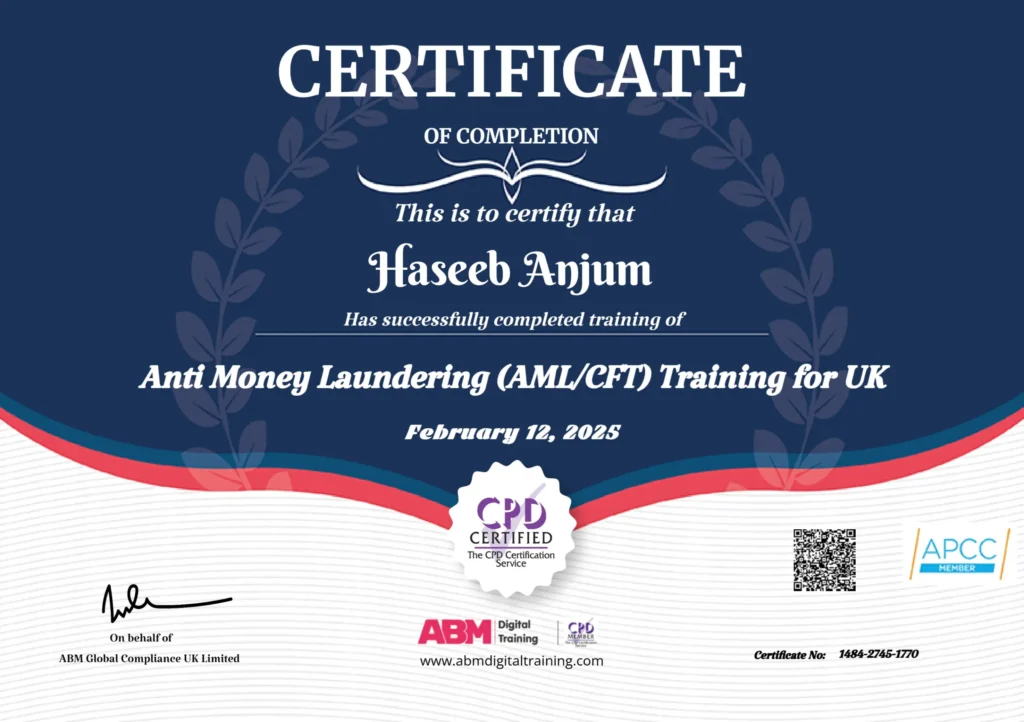
This course will also make you certified not only in terms of training, but also to show your skills off to the professional world and grow with the world’s top compliance regulatory firms with the same goal and motivation as yours.
In this web training course, we will touch on 8 important topics including:
If you are interested in learning all about these topics, enrol on this course right away! Follow the enrolment procedure given on this website to gain full access to the training course. Till then, hope to see you later in this course.
As our world becomes increasingly digital, so too do the methods criminals use to launder money. Despite this, many businesses still use outdated compliance measures that leave them vulnerable to attack. One way to protect yourself is to ensure that your employees are properly trained in AML compliance for electronic money. Some key elements of this training should include understanding how electronic money is used in criminal activities, what red flags to look out for, and what reporting requirements are in place. With this knowledge, your employees will be better equipped to identify and report suspicious activity, keeping your business safe from financial crime.
AML training is important for Electronic Money because it helps to protect against money laundering and terrorist financing. In addition, AML training provides employees with the knowledge and skills they need to identify and report suspicious activity. It also helps to create a company’s compliance culture, which can deter would-be criminals from targeting the business. By ensuring that employees are properly trained in AML, businesses can help to create a safer and more secure environment for themselves and their customers.
Anti-money laundering training is required for any person or company involved in electronic money. This includes financial institutions, payment service providers, and e-money issuers. The training must be completed by a certified anti-money laundering specialist and must be specific to the electronic money industry. However, it is recommended that all users of electronic money receive some form of anti-money laundering training. This will help them to better understand the risks associated with the use of electronic money and how to avoid becoming a victim of money laundering.
The course of anti-money laundering training for Electronic Money has the following aims: to increase knowledge and awareness of money laundering methodologies, typologies, and trends; to equip participants with the skills needed to identify and report suspicious transactions, and to raise awareness of the importance of compliance with international anti-money laundering regulations. The course is designed for individuals who work in the electronic money sector, including employees of e-money institutions, payment service providers, and money remitters. It will also interest those who work in related sectors, such as banking, securities, and payments.
When it comes to anti-money laundering training for electronic money, there are a few reasons why you should choose us. First and foremost, we have a team of experts who are highly experienced in this field. They will be able to provide you with the most comprehensive and up-to-date training possible. Secondly, we offer a variety of courses to choose from, so you can find one that best suits your needs. And lastly, we offer very competitive rates for our services. When it comes to ensuring compliance with anti-money laundering regulations, we are the company you can trust. Contact us today to learn more about our services.
The AML Training for Electronic Money is an online course that has been designed to help you understand the requirements of the Money Laundering Regulations 2017 and how they apply to electronic money.
The AML training course for Electronic Money typically requires a completion time of approximately 1-2 hours. This duration allows participants to grasp the necessary knowledge and understanding of anti-money laundering practices specific to electronic money transactions. However, the actual completion time may vary depending on individual learning speed and engagement with the course material.
ABM Digital Training provides specialized Anti Money Laundering (AML) training for E-money programs specifically designed for electronic money systems. You can easily access their comprehensive AML training for E-money courses on their official website. Gain the knowledge and skills needed to ensure regulatory compliance and safeguard your electronic money operations. Don’t miss the opportunity to enhance your expertise in AML within the electronic money sector with ABM Digital Training. Go through our website today to explore the available training options and enrol in the program that best suits your needs.
This chapter touches on all types of risks that are involved when dealing with E-money and how to control the regulatory environment for each transaction so that the institutions don’t fall under these risks.
Governance and Culture, Enterprise wise risk assessment and Inherent and Residual Risk are some of the topics that will be discussed in this chapter.
Each Risk assessment through will be based through Scoring base model, Risk models and Risk control.
This chapter touches on all types of risks that are involved when dealing with E-money and how to control the regulatory environment for each transaction so that the institutions don’t fall under these risks.
Governance and Culture, Enterprise wise risk assessment and Inherent and Residual Risk are some of the topics that will be discussed in this chapter.
Each Risk assessment through will be based through Scoring base model, Risk models and Risk control.
The final chapter of this course will talk all about that we had discussed in our previous training for Anti-Money Laundering as a refresher and to relate how the same policies are also applicable for all EMI’S.
This chapter will highlight all relevant responsibilities of the Senior Management in the institutions, as well as how to conduct Trainings, staff awareness and keeping multiple records.
This chapter will also brief about the responsibilities of a nominated officer (MLRO) in each EMI to ensure smooth flow of payment transactions between the client and their bank accounts.
The final chapter of this course will talk all about that we had discussed in our previous training for Anti-Money Laundering as a refresher and to relate how the same policies are also applicable for all EMI’S.
This chapter will highlight all relevant responsibilities of the Senior Management in the institutions, as well as how to conduct Trainings, staff awareness and keeping multiple records.
This chapter will also brief about the responsibilities of a nominated officer (MLRO) in each EMI to ensure smooth flow of payment transactions between the client and their bank accounts.
The final chapter of this course will talk all about that we had discussed in our previous training for Anti-Money Laundering as a refresher and to relate how the same policies are also applicable for all EMI’S.
This chapter will highlight all relevant responsibilities of the Senior Management in the institutions, as well as how to conduct Trainings, staff awareness and keeping multiple records.
This chapter will also brief about the responsibilities of a nominated officer (MLRO) in each EMI to ensure smooth flow of payment transactions between the client and their bank accounts.
The final chapter of this course will talk all about that we had discussed in our previous training for Anti-Money Laundering as a refresher and to relate how the same policies are also applicable for all EMI’S.
This chapter will highlight all relevant responsibilities of the Senior Management in the institutions, as well as how to conduct Trainings, staff awareness and keeping multiple records.
This chapter will also brief about the responsibilities of a nominated officer (MLRO) in each EMI to ensure smooth flow of payment transactions between the client and their bank accounts.