The provision of effective anti-money laundering (AML) training is essential in helping organizations meet their regulatory obligations and to prevent the negative impacts money laundering and terrorist financing can have on society, the economy, organizations, their customers and employees. This module will explain what money laundering and terrorist financing are and what way are they linked to each other. What people normally have a perception related to money laundering and the various forms it can take.
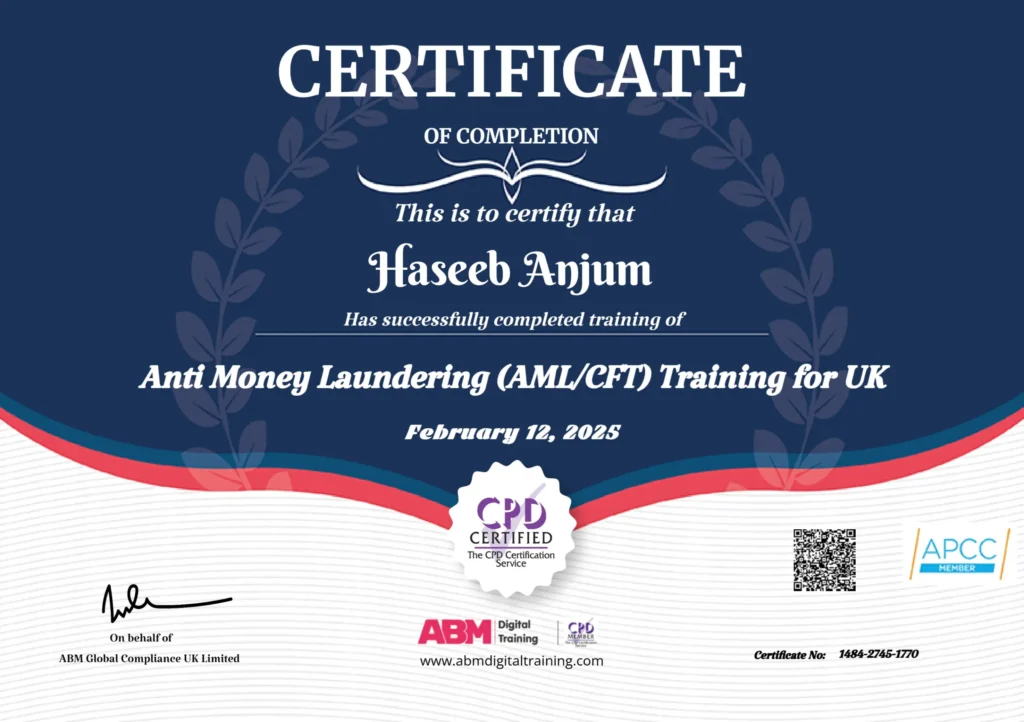
Money laundering has 3 stages Placement layering and Integration and we will know how each of the stage can be done in multiple ways. You will also explore and practice this training by completing quizzes relevant to each topic and once you clear the quiz, you will hold a certification from one of the recognized financial services firms in EU that holds significant value for your career and profession.
Topics Covered in the Course:
- Introduction to Money Laundering and Terrorist financing
- Legislation regarding Money laundering
- Risk Assessment, Risk Based Approach
- Sanctions, Customer Due Diligence
- Senior Management and Staff Training
- Record keeping and reporting obligation
- Complaints handling and safeguarding requirements
Understanding Money Laundering
Money laundering refers to the process of concealing the origins of illicitly obtained funds to make them appear legitimate. Criminals employ various techniques, such as layering and integration, to disguise the source of funds, making it difficult for authorities to trace their illicit activities. A thorough understanding of money laundering methods and typologies is crucial for combating this financial crime effectively.
Framework of Anti-Money Laundering for European Union
The European Union has implemented a robust AML framework to combat money laundering across its member states. The framework includes several directives, such as the Fourth AML Directive (AMLD4) and the Fifth AML Directive (AMLD5), which provide guidelines and obligations for financial institutions, designated non-financial businesses, and professions (DNFBPs), and other entities to prevent money laundering and terrorist financing activities.
The Significance of AML Training
AML training plays a pivotal role in developing a knowledgeable workforce that can identify and report suspicious transactions effectively. By raising awareness about money laundering risks, AML training empowers individuals and organizations to detect and prevent illicit financial activities. It also ensures compliance with regulatory requirements and helps in creating a strong defence against potential reputational damage.
Benefits of AML Training for Individuals
For individuals working in the financial sector or related industries, AML training provides numerous advantages. It equips them with the necessary knowledge and skills to recognize red flags, identify suspicious transactions, and understand their reporting obligations. AML training enhances their professional expertise, credibility, and employability, while also promoting a culture of integrity and ethical conduct within the industry.
Benefits of AML Training for Organizations
Organizations that invest in comprehensive AML training programs gain substantial benefits. AML training mitigates the risk of financial penalties and regulatory sanctions by ensuring compliance with AML laws and regulations. It strengthens internal controls, reduces the likelihood of money laundering incidents, and safeguards the organization's reputation. Additionally, AML training fosters a culture of compliance and ethics among employees, reinforcing the organization's commitment to fighting financial crime.
Core Components of Effective AML Training Programs
To maximize the effectiveness of AML training, certain core components should be considered. These include tailored content that reflects the specific industry and regulatory requirements, interactive and engaging learning methodologies, real-life case studies and examples, regular updates to keep pace with evolving AML risks, and ongoing assessments to measure the training's impact and effectiveness.
Regulatory Compliance and AML Training in EU
AML training is closely linked to regulatory compliance within the EU. By implementing robust AML training programs, organizations demonstrate their commitment to meeting regulatory expectations. Such proactive measures also help organizations avoid financial penalties, legal repercussions, and reputational damage associated with non-compliance.
Technology and Innovation in AML Training
Advancements in technology have revolutionized the field of AML training. Utilizing innovative tools, such as artificial intelligence, machine learning, and data analytics, can enable more efficient and targeted AML training. Interactive e-learning platforms, virtual reality simulations, and gamified training modules can further enhance learner engagement and retention, making AML training more effective and enjoyable.